Formula 1 · Grail List
Most Valuable Lewis Hamilton Cards
updated ·prices as of Sep 13, 2026
Did you know? A fun fact about Lewis HamiltonThe ranking
- #1
 2020 Topps Dynasty Formula 1
Autographs
/5Topps Dynasty is F1's ultra-premium line: an on-card autograph, serial-numbered to just a handful.
from $129,000 - #2
 2020 Topps Chrome Formula 1
Gold Refractor
/50The gold refractor of his flagship chrome, numbered to 50 — a genuinely scarce, high-demand parallel.
from $199.99 - #3
 2020 Topps Chrome Formula 1
Orange Refractor
/25A bold, low-numbered refractor (to 25) that collectors chase for its color and scarcity.
from $100 - #4
 2020 Topps Chrome Formula 1
Pink Refractor
SSPA short-printed color refractor prized for its rarity; exact numbering pending verification.
from $15.50 The cards that anchor a serious Lewis Hamilton collection — the one-of-ones and rarest refractors and autographs from the F1 GOAT's chrome era. Ranked by rarity and collector demand; prices update live from eBay.
- #5
 2021 Topps Chrome Sapphire Formula 1
Topps Chrome Sapphire Formula 1
The Sapphire edition brought a glassy, vivid finish to F1 chrome and became an instant collector favorite.
from $45 - #6
 2020 Topps Chrome Formula 1
Aqua Refractor
SSPA sought-after color refractor; scarcity estimated from how rarely it surfaces.
from $139 - #7
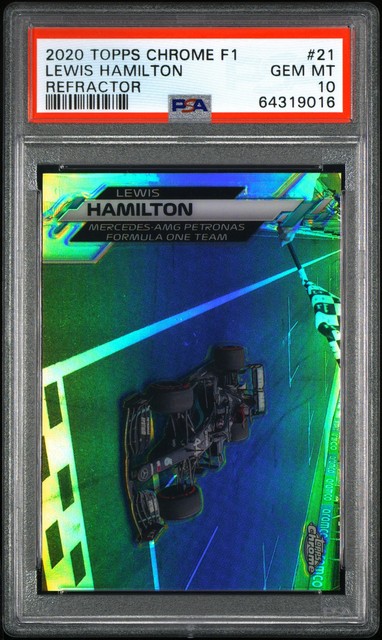 2020 Topps Chrome Formula 1
Refractor
The base Refractor — the iconic, attainable chrome that most Hamilton collections start with.
from $99.99 - #8
 2020 Topps Chrome Formula 1
Topps Chrome Formula 1
The 2020 Topps Chrome base — his flagship mainstream chrome card and the foundation of the set.
from $44.99
Frequently asked
- What is Lewis Hamilton's most valuable card?
- His 2020 Topps Chrome Formula 1 SuperFractor is the apex — a true one-of-one of his flagship chrome card that has sold for around $900,000. Below it, low-numbered refractors and Topps Dynasty on-card autographs lead the market.
- What is Lewis Hamilton's rookie card?
- F1 lacked a mainstream card program until Topps Chrome Formula 1 debuted in 2020, so the 2020 Topps Chrome base is treated as his flagship chrome card, with the Refractor the most-chased version.
- Why are there so few old Lewis Hamilton cards?
- Despite debuting in F1 in 2007, Hamilton had almost no mainstream cards until 2020 — Formula 1 simply didn't have a major licensed program before then, which concentrates demand on his modern chrome.
- What's the cheapest Lewis Hamilton card to start with?
- A 2020 Topps Chrome Formula 1 base or a common Refractor is the usual entry point — widely available and the foundation of the set.
- Are Lewis Hamilton cards a good investment?
- Cards are collectibles, not guaranteed investments — values move with results, the Ferrari move, and hobby demand, and can fall as fast as they rise. This page is for research and enjoyment, not financial advice; buy what you love and do your own homework.
Where this comes from
How we rank these cards
We rank by grail status — how coveted a card is — not by price alone. A card rises on its iconic standing (flagship rookies, on-card autographs, and marquee inserts), its scarcity (low serial numbers and true one-of-ones), and collector demand, with market value as a strong signal. The most expensive card isn't always the grail.
Every list is checked against several sources before it goes live. The facts — how rare a card is, what it sells for, which versions exist — come only from card checklists, price trackers, and real sold listings.
What the community is chasing shapes how we order the list, but it never counts as a fact on its own. It tells us about demand, not whether a card truly belongs at the top.
We only call a card's rarity confirmed when the maker officially publishes the number. Otherwise we label it an estimate — and we never make a number up.
Each card photo comes from the live eBay listing its button points to, so you're always seeing a real card that's actually for sale — credited to that listing, never taken from the card maker.