MLB · Grail List
Most Valuable Barry Bonds Cards
updated ·prices as of Sep 13, 2026
Did you know? A fun fact about Barry BondsThe ranking
- #1
 1986 Topps Traded
Topps Traded
His true rookie card, from the 1986 Topps Traded update set showing him as a Pittsburgh Pirate. The cornerstone of any Bonds collection and the most sought-after of his rookies.
from $9.99 - #2
 1986 Topps Traded
Tiffany
The glossy 'Tiffany' version of his rookie — produced in far smaller numbers than the base card, making it a genuine scarcity and a premium grail.
from $1,499 - #3
 1986 Fleer Update
Fleer Update
A 1986 rookie from the Fleer Update set — one of the three debut-year Bonds cards prized alongside the Topps Traded.
from $25 - #4
 1986 Donruss The Rookies
Donruss The Rookies
His card in the 1986 Donruss The Rookies boxed set — another true 1986 rookie and a staple of the debut-year trio.
from $20 The cards that define a Barry Bonds collection — his 1986 rookies, led by the 1986 Topps Traded, along with the 1987 flagship rookies and their scarcer Tiffany versions. These come from the late-1980s mass-production era, so none carry printed print runs; ranked by grail status and collector demand, with prices updating live from eBay.
- #5
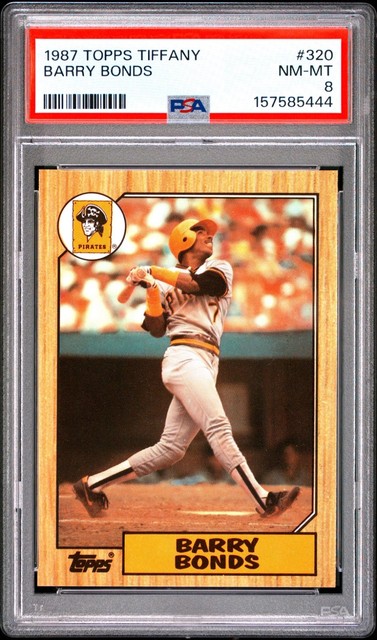 1987 Topps
Base Card
His first flagship base card, from the iconic wood-grain 1987 Topps set — instantly recognizable and the accessible cornerstone rookie.
from $235 - #6
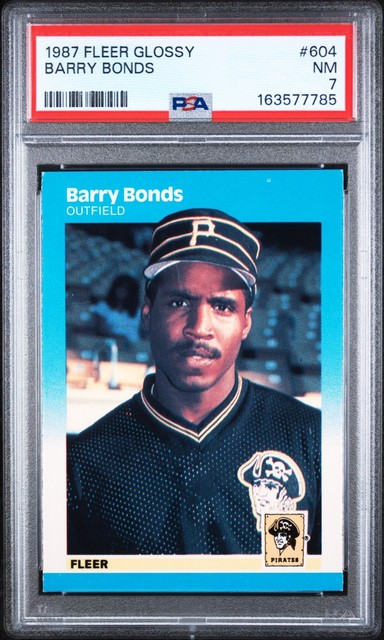 1987 Fleer
Base Card
The 1987 Fleer base card — widely collected and a classic entry point into his early-career cards.
from $19.95 - #7
 1987 Donruss
Base Card
The 1987 Donruss base card, part of the black-bordered set that is notoriously tough to find with clean edges.
from $14.99 - #81987 Topps
Tiffany
The scarce glossy 'Tiffany' version of the 1987 Topps card — a limited high-end parallel that carries a strong premium over the plentiful base.
from $40
Frequently asked
- What is Barry Bonds' rookie card?
- His true rookie is the 1986 Topps Traded #11T, from the update set that first pictured him as a Pittsburgh Pirate. Collectors also chase the 1986 Fleer Update and 1986 Donruss The Rookies cards from that same debut year.
- What is Barry Bonds' most valuable card?
- The 1986 Topps Traded #11T is the headline rookie, and its glossy 'Tiffany' version is far scarcer and commands a big premium. In top graded condition — especially PSA 10 — these are the Bonds cards that bring the highest prices.
- Which 1987 Bonds cards should I know?
- His first flagship base cards arrived in 1987: Topps #320, Donruss #361 and Fleer #604. They are affordable and widely available, but sharp, high-grade copies still stand out because the cards are prone to centering and edge wear.
- Why don't these cards list a print run?
- Cards from this era were produced in huge quantities but manufacturers never published or serial-numbered the totals. Scarcity today comes from how few survive in top condition, not from a stamped number, so no print run is confirmed for any of them.
- What's the most affordable Bonds rookie to start with?
- The 1987 flagship rookies — Topps #320, Donruss #361 and Fleer #604 — are the accessible entry points, usually the cheapest way into his rookie run. The 1986 Topps Traded is the step-up grail from there.
- Are Barry Bonds cards a good investment?
- Sports cards are collectibles, not guaranteed investments — values move with hobby demand and can fall as fast as they rise. This page is for research and enjoyment, not financial advice; buy what you love and do your own homework.
Where this comes from
How we rank these cards
We rank by grail status — how coveted a card is — not by price alone. A card rises on its iconic standing (flagship rookies, on-card autographs, and marquee inserts), its scarcity (low serial numbers and true one-of-ones), and collector demand, with market value as a strong signal. The most expensive card isn't always the grail.
Every list is checked against several sources before it goes live. The facts — how rare a card is, what it sells for, which versions exist — come only from card checklists, price trackers, and real sold listings.
What the community is chasing shapes how we order the list, but it never counts as a fact on its own. It tells us about demand, not whether a card truly belongs at the top.
We only call a card's rarity confirmed when the maker officially publishes the number. Otherwise we label it an estimate — and we never make a number up.
Each card photo comes from the live eBay listing its button points to, so you're always seeing a real card that's actually for sale — credited to that listing, never taken from the card maker.