NBA · Grail List
Most Valuable Damian Lillard Cards
updated ·prices as of Sep 13, 2026
Did you know? A fun fact about Damian LillardThe ranking
- #1
 2012 Panini National Treasures
Rookie Patch Autographs
/99His premium signed rookie: a game-worn patch card numbered to just 99 — scarcer than most of his class because of an exclusive autograph deal elsewhere. A top-grade copy has sold for around $14,000.
from $3,999 - #2
 2012 Panini Prizm
Gold
/10The Gold parallel of his base Prizm rookie, numbered to just 10 — arguably his single most desirable card, with a top-grade copy selling for over $18,000.
from $2,999.99 - #3
 2012 Panini Prizm
Silver
The Silver Prizm rookie — his iconic blue-chip base chase and the card most collectors picture first when they think Lillard rookie.
from $115 The cards that anchor a Damian Lillard collection — the scarce National Treasures rookie patch autograph, the flagship Prizm rookies, and the color parallels collectors chase. Ranked by grail status and collector demand; prices update live from eBay.
- #42012 Panini Prizm
Panini Prizm
The base Panini Prizm rookie — the accessible, universally-recognized flagship rookie from Prizm's debut year.
from $29 - #5
 2012 Panini Prizm
Green
The retail-only Green Prizm parallel — an unnumbered but scarce color version popular with Prizm collectors.
from $80 - #6
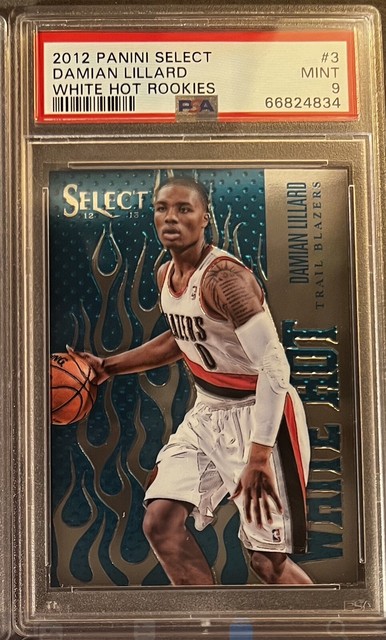 2012 Panini Select
Rookies
His Select rookie — a bold, tiered chrome design from Select's debut year with a strong following among modern collectors.
from $100
Frequently asked
- What is Damian Lillard's most valuable card?
- His scarcest chase is the 2012-13 Panini Prizm Gold parallel (#245), numbered to just 10, with a top-grade copy having sold for over $18,000. His 2012-13 National Treasures Rookie Patch Autograph, numbered to 99, is his premium signed rookie.
- What is Damian Lillard's rookie card?
- All of his rookie cards are from 2012-13. The most recognized base rookie is the Panini Prizm (#245); the Silver Prizm is the iconic chase, and the National Treasures RPA is the premium signed rookie.
- How rare is the Lillard National Treasures rookie?
- It's numbered to just 99 — scarcer than most of his draft class, whose National Treasures rookies run to 199 — because of his exclusive autograph deal elsewhere. The Gold Prizm parallel of his base rookie is scarcer still, at only 10 copies.
- What's the most affordable Lillard rookie to start with?
- The base Panini Prizm (#245) and his other 2012-13 base rookies are the accessible entry points — widely available and popular, usually the cheapest way into his rookie run.
- Which Lillard rookie is best to get graded?
- The chrome-style Prizm rookies reward grading most, since their surfaces and corners are condition-sensitive and a clean grade adds real value. Compare recent graded-vs-raw sales before paying to grade.
- Are Damian Lillard cards a good investment?
- Sports cards are collectibles, not guaranteed investments — values move with on-court performance and hobby demand and can fall as fast as they rise. This page is for research and enjoyment, not financial advice; buy what you love and do your own homework.
Where this comes from
How we rank these cards
We rank by grail status — how coveted a card is — not by price alone. A card rises on its iconic standing (flagship rookies, on-card autographs, and marquee inserts), its scarcity (low serial numbers and true one-of-ones), and collector demand, with market value as a strong signal. The most expensive card isn't always the grail.
Every list is checked against several sources before it goes live. The facts — how rare a card is, what it sells for, which versions exist — come only from card checklists, price trackers, and real sold listings.
What the community is chasing shapes how we order the list, but it never counts as a fact on its own. It tells us about demand, not whether a card truly belongs at the top.
We only call a card's rarity confirmed when the maker officially publishes the number. Otherwise we label it an estimate — and we never make a number up.
Each card photo comes from the live eBay listing its button points to, so you're always seeing a real card that's actually for sale — credited to that listing, never taken from the card maker.