NFL · Grail List
Most Valuable Walter Payton Cards
updated ·prices as of Sep 19, 2026
Browse every Walter Payton cardThe ranking
- #1
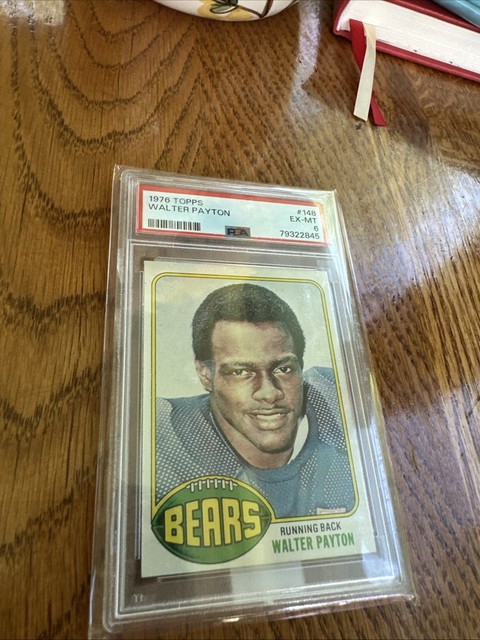 1976 Topps
Base Card
The definitive Payton rookie and one of the most recognizable cards in the hobby. Gem-mint PSA 10 copies are extremely scarce and have sold for $75,000-$100,000+.
from $279.99 A Walter Payton collection centers on his 1976 rookie year — the 1976 Topps is the card every collector chases, with two much rarer regional oddball issues from the same year as alternate grails. Because he played and passed away before the modern on-card autograph era, his card legacy is almost entirely vintage. Ranked by grail status; prices update live from eBay.
- #2
 1976 Crane Discs
Base Card
A national potato-chip promotional issue from Payton's rookie year — scarcer than the Topps card, though more available than the regional Saga Discs.
from $54.95 - #3
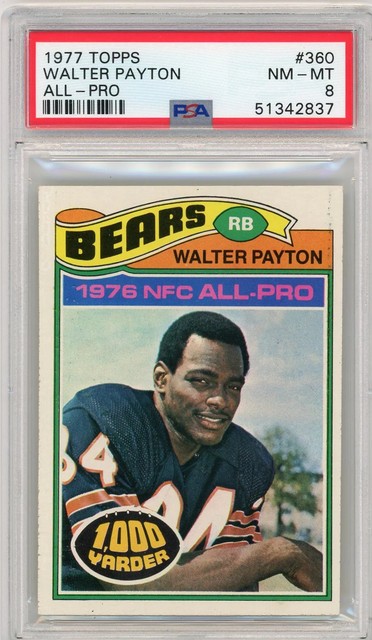 1977 Topps
Base Card
His second-year Topps card, from the season he won NFL MVP and rushed for over 1,800 yards — a popular, more affordable way into a Payton vintage collection.
from $75
Frequently asked
- What is Walter Payton's most valuable card?
- His 1976 Topps rookie (#148) is the definitive grail — the card every collector associates with him. Gem-mint PSA 10 copies have sold for $75,000-$100,000+, since fewer than 1 in 200 graded copies reach that grade.
- What is Walter Payton's rookie card?
- His main rookie is the 1976 Topps (#148). Two much rarer regional food-promotion issues from the same year, the 1976 Saga Discs and 1976 Crane Discs, also count as rookie cards and are far scarcer, though less iconic.
- How rare is the 1976 Topps rookie in top grade?
- It wasn't serial-numbered, so raw and mid-grade copies are common — but true gem-mint condition is very hard to find, with only a small fraction of graded copies ever earning a PSA 10.
- What's the most affordable Payton rookie-year card to start with?
- A lower-grade 1976 Topps is the accessible entry point — commons in played condition trade for modest prices. The 1976 Saga Discs and Crane Discs are pricier despite being less famous, since so few survive.
- Does Walter Payton have autograph cards?
- Genuine on-card autographs are rare since he played (and passed away in 1999) before the modern signed-card era. His card legacy is almost entirely vintage — his rookie-year issues are the real grails, not signed inserts.
- Are Walter Payton cards a good investment?
- Sports cards are collectibles, not guaranteed investments — values move with hobby demand and can fall as fast as they rise. This page is for research and enjoyment, not financial advice; buy what you love and do your own homework.
Where this comes from
How we rank these cards
We rank by grail status — how coveted a card is — not by price alone. A card rises on its iconic standing (flagship rookies, on-card autographs, and marquee inserts), its scarcity (low serial numbers and true one-of-ones), and collector demand, with market value as a strong signal. The most expensive card isn't always the grail.
Every list is checked against several sources before it goes live. The facts — how rare a card is, what it sells for, which versions exist — come only from card checklists, price trackers, and real sold listings.
What the community is chasing shapes how we order the list, but it never counts as a fact on its own. It tells us about demand, not whether a card truly belongs at the top.
We only call a card's rarity confirmed when the maker officially publishes the number. Otherwise we label it an estimate — and we never make a number up.
Each card photo comes from the live eBay listing its button points to, so you're always seeing a real card that's actually for sale — credited to that listing, never taken from the card maker.
Was this list helpful?